Apple Watch health features: the smartwatch to beat on health metrics
When Apple put a working EKG on a wrist in 2018, it was the only direct-to-consumer device that could make that claim. Eight years and several watchOS updates later, the Apple Watch is still the smartwatch other brands measure themselves against on health metrics: ECG and irregular rhythm alerts, sleep apnea notifications validated against thousands of nights of clinical data, and hypertension pattern alerts most competitors don't offer at all.
None of that makes it a diagnostic device. Every feature below is a screening tool: a health companion quietly working in the background, built to flag something worth a doctor's attention, not to replace one.
Quick verdict: what makes the Apple Watch the gold standard on health
ECG, irregular rhythm notifications, sleep apnea detection, and hypertension pattern alerts sit in a category of one: doctors already use this data to help guide real treatment decisions, like adjusting how often a patient needs a blood thinner instead of a fixed year-round prescription. That's a different league from a step counter.
Not every Apple Watch has every feature though: the model you pick decides what you get, covered in the comparison below.
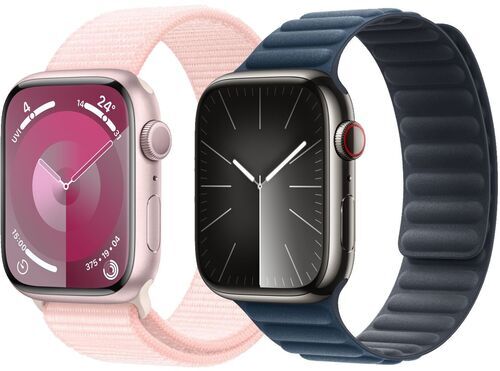
Browse the full Apple Watch range available on refurbed to compare current models and pricing.
ECG and irregular heart rhythm notifications
The Apple Watch's ECG works by closing a circuit across your body. One electrode sits on the back crystal against your wrist, the other on the digital crown. Rest a finger on the crown for about 30 seconds, and the watch reads a single-lead electrocardiogram, the same basic principle behind a hospital EKG's left-arm-to-right-arm lead.
In Apple's clinical trial of around 600 people, the ECG app reached 99.6% specificity for sinus rhythm and 98.3% sensitivity for atrial fibrillation. Real-world testing against a 12-lead hospital EKG found the watch's single lead catching an early heartbeat pattern the wearer hadn't noticed, later confirmed by a cardiologist on the full clinical read. The takeaway from that test still holds up: probably no AFib, but an early heartbeat pattern nobody would have known about without the EKG.
Irregular rhythm notifications work passively in the background. The watch checks your rhythm every 2 to 4 hours and steps that up to every 15 minutes or less if something looks off. Five irregular readings out of six within 48 hours trigger a possible atrial fibrillation flag.
A flagged reading is a reason to call your doctor, not a diagnosis on its own. False positives happen, and the watch's own data backs that caveat up.
Sleep apnea detection: how the Apple Watch reads your breathing at the wrist
Picture your chest rising and falling as you breathe. That same oscillation shows up as tiny movements at your wrist, and the Apple Watch's accelerometer picks it up. Machine learning models trained on that signal flag interruptions of 20 to 30 seconds, the kind of shallow or paused breathing associated with sleep apnea.
Wear the watch for at least 10 nights within a rolling 30-day window, and the Health app shows a nightly ‘breathing disturbances’ reading: elevated or not elevated. Apple built the feature around that 30-day view instead of single-night alerts, to smooth out normal night-to-night swings from alcohol, sleep position, or a rough night's rest.
The validation behind it is substantial: over 11,000 nights of ground-truth sleep lab and at-home recordings, plus another 1,500 nights for the FDA submission. Apple is the second major smartwatch maker to ship sleep apnea detection, after Samsung's Galaxy Watch. The two approaches differ sharply: Samsung needs just 2 nights of data and folds in blood oxygen readings, while Apple relies on the accelerometer and machine learning alone over the full 30 days.
As with every feature here, no smartwatch can diagnose sleep apnea on its own. A consistently elevated reading is worth a conversation with a doctor, ideally backed by a proper sleep study.
Hypertension notifications: a pattern alert, not a blood pressure reading
Here's the part worth repeating: the Apple Watch is not a blood pressure monitor. It can't give you a systolic or diastolic number on demand the way a heart rate check does.
What it does is analyze patterns in your optical heart sensor data over a 30-day monitoring window, checking for signs consistent with hypertension. Turn it on through the Health app's Health Checklist, confirm your age and diagnosis history, and the watch starts building that picture in the background. If it spots a consistent pattern, you get a notification, not a diagnosis and not an emergency alert.
If you want an actual reading, Apple Health also supports a manual blood pressure log paired with a home cuff, with reminders and space to track systolic and diastolic numbers over time.
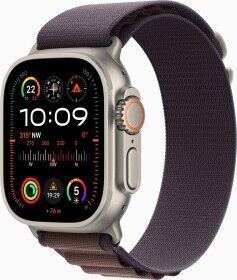
Hypertension notifications debuted on Series 11 and Ultra 3, and reached Series 9, Series 10, and Ultra 2 through a watchOS update since they share the same health sensor generation. The real value here is a nudge to talk to your doctor, not a number to self-diagnose from.
Pulse oximetry, fall detection, and noise monitoring: the quiet safety net
Four photodiodes on the back of the watch take a blood oxygen reading in about 15 seconds, on demand or periodically through the day. A normal resting range sits around 95 to 99%, though people with COPD or emphysema often run lower than that as their baseline. Home oxygen is typically considered below 88%. The feature earned its ‘silent hypoxia’ nickname during the pandemic, when a dropping reading became an early warning sign before symptoms caught up.
Fall detection combines the accelerometer and gyroscope to recognize a hard fall, and calls emergency services automatically after about a minute of no movement. The CDC estimates over 800,000 older adults are hospitalized every year after a fall, exactly the population this feature was built for.
The Noise app tracks ambient sound against the World Health Organization's safe listening threshold of 80 decibels over 40 hours a week, and alerts you once you hit that weekly dose. Around 1 in 5 teenagers already has some hearing loss, roughly 30% higher than two decades ago.
Not every feature lands as pure convenience. Hand-washing detection, which listens for the sound of soap and running water, unsettles some people more than it reassures them. Fair enough. It's still one of the more literal examples of a watch quietly working in the background.
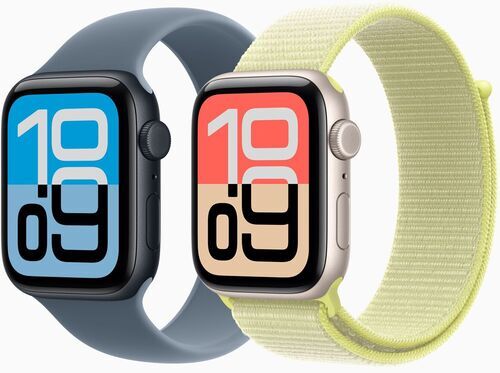
Apple Watch SE 3 vs Series 11 vs Ultra 3: which health features do you get?
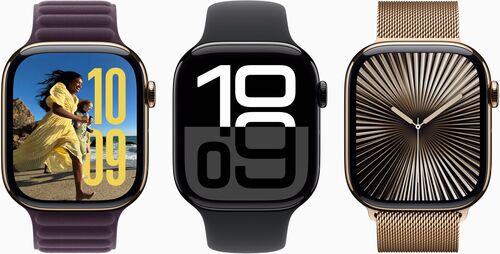
Not every Apple Watch gives you the same health suite. Series 11 carries the full ECG, blood oxygen, and hypertension package, the model to reach for if health tracking is the priority. Ultra 3 shares that same sensor generation in a larger, more rugged case. SE 3 trades ECG and blood oxygen for a lower price, but keeps sleep apnea notifications and fall detection.
Here's exactly what each model unlocks.
Health features, side by side
From 3 519 kr
Heart rate sensor
Optical + electrical (ECG)
ECG app
Yes
Blood oxygen app
Yes
Hypertension notifications
Yes
Sleep apnea notifications
Yes
Fall/crash detection
Yes
Weight
37.8 g
Case material
Aluminum
Screening tool, not a diagnosis: what doctors say
Cardiologist Rod Passman at Northwestern Medicine puts it plainly: a watch flagging something wrong isn't the same as a diagnosis. He's running NIH-funded research into watch-guided anticoagulation, using rhythm data to decide when a patient needs a blood thinner instead of a fixed year-round dose, balancing the benefit against the bleeding risk.
Sleep specialist Matt Bianchi makes the same point about sleep apnea notifications: no smartwatch can give a medical diagnosis on its own.
Doctors don't insist on the Apple Watch specifically either. Samsung, Fitbit, and Cardia all come up as legitimate options, chosen based on what phone a patient already owns and what they can afford. Worth keeping in mind before assuming Apple is the only real choice.
How does the Apple Watch compare to other health-focused smartwatches?
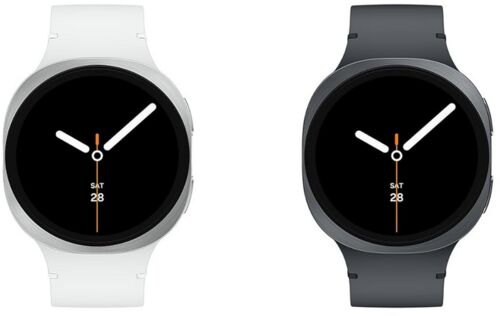
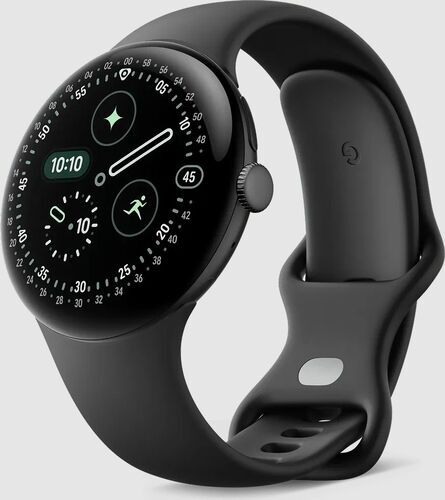
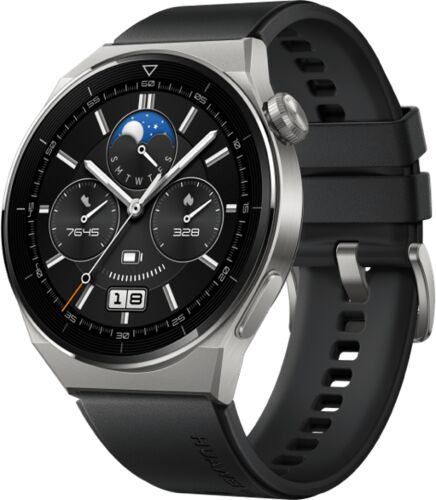
Series 11 still leads on raw health sensing, but it's worth seeing by how much. Galaxy Watch 8, Pixel Watch 4, and Huawei Watch GT 3 Pro all track heart rate, movement, and temperature reliably. None of them match the ECG, sleep apnea, or hypertension detection on the Apple side, and their spec sheets don't claim to.
Health and tracking specs side by side
Heart rate sensor
Optical + electrical (ECG)
Advanced health monitoring (ECG, sleep apnea, hypertension)
Yes
Motion & fall sensors
Accelerometer, gyroscope
Temperature sensing
Yes
Case material
Aluminum
Which Apple Watch (or alternative) should you buy for health tracking?
If you have a cardiac history or you're buying for an older parent, Series 11 or Ultra 3 make the most sense: ECG, fall detection, and hypertension alerts all matter more at that stage of life. Ultra 3 is worth the extra size and weight only if you're also outdoors a lot and want the longer battery life that comes with it.
Don't need ECG and want to spend less? SE 3 still gives you sleep apnea notifications, fall detection, and continuous heart rate tracking.
On Android, or just after a lower entry price with solid everyday tracking, the Galaxy Watch 8 or Pixel Watch 4 cover heart rate, movement, and sleep tracking well. Just don't expect ECG or sleep apnea detection from either.
Refurbished also stretches your budget further: a refurbished Series 10 gets you the same ECG-capable sensor as the newest models, for less.
Buying refurbished saves real resources too
Every new Apple Watch means fresh aluminum, titanium, and rare earth materials mined, shipped, and assembled from scratch. Choosing a refurbished device instead avoids roughly 70kg of CO2 emissions and around 100,000 litres of water per unit: the raw material extraction and manufacturing a refurbished purchase skips entirely.
A refurbished Series 10 keeps the same ECG-capable sensor as the newest models, professionally tested and backed by warranty, at a lower environmental and financial cost. That's the refurbed trade-off: less new production, the same health features, for less money.
Apple Watch health features: FAQs
Is the Apple Watch ECG accurate?
Yes, within its intended use. Apple's clinical trial measured 99.6% specificity for sinus rhythm and 98.3% sensitivity for atrial fibrillation, and it's a single-lead reading, not a full 12-lead hospital EKG.
Can a smartwatch diagnose AFib or sleep apnea?
No. Every feature here is a screening tool. A flagged reading is a reason to see a doctor, not a diagnosis on its own.
Which Apple Watch has blood oxygen and hypertension notifications?
Series 11 and Ultra 3 ship with both, and the feature also reached Series 9, Series 10, and Ultra 2 through a software update, since they share the same sensor generation.
Do other smartwatches have ECG like the Apple Watch?
Rarely at this price point. The comparison above shows exactly where the gap sits today.

Sign up for our newsletter for the first time and save 200 kr!
Never miss an offer again.
Information about the use of personal data can be found in our Privacy policy.
Get the refurbed app
For iOS and Android


Confirm sign-up
Click the link in our confirmation e-mail to receive your voucher. It will be applicable to purchases from 3000kr.
- © Refurbed Marketplace GmbH
- Accessibility
- T&C
- Privacy Policy
- Imprint
- Legal Notices
- European Data Act
- Cookie Policy