Surface Laptop Ultra: buy now or wait?
Microsoft's Surface Laptop Ultra pairs Windows with an NVIDIA RTX Spark chip, up to 128GB of unified memory, and full CUDA support inside a 15-inch touchscreen laptop under 2kg. No price. No confirmed release date beyond later 2026. No refurbished stock for years, since that only builds up once real units are out in the world.
The honest answer for most people: buy a proven refurbished machine now. Wait only if a narrow set of needs, such as huge local AI models, CUDA, Windows, touch, and portability all at once, applies to how you work.
What Microsoft has actually confirmed
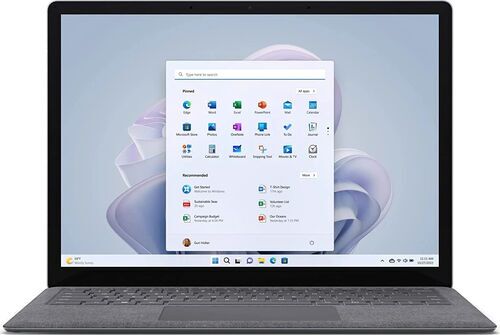
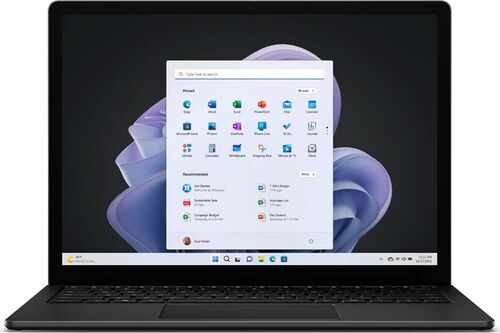
Microsoft's own preview and product pages confirm the hardware: NVIDIA RTX Spark graphics with full CUDA support, up to 128GB of unified memory, and a claimed one petaflop of sparse FP4 compute aimed at local AI models up to 120 billion parameters. The screen is a 15-inch, 3:2 mini-LED touchscreen at 262 pixels per inch and up to 2,000-nit HDR peak, in a body under 18mm thick and under 2kg. Ports cover USB-C, USB-A, HDMI, a full-size SD reader, and a headphone jack, alongside a user-serviceable SSD and a haptic touchpad.
What's still missing: price, exact memory and storage tiers, battery capacity, port speeds, and regional service terms. Availability is later in 2026, subject to certification and region, with no fixed date.
Why this Surface is different from a normal laptop launch
This isn't just a faster Surface. Microsoft controls the whole stack around one flagship design: Windows, firmware, drivers, and the management tools IT teams already use through Entra and Intune. That large unified memory pool also means models and files can stay on the device instead of a remote server, which matters when the data can't leave the building.
The flip side: new silicon, a new Windows scheduler, new drivers, and new thermals are all launching together for the first time. Buying one isn't choosing a faster laptop. It's choosing whether to adopt an unproven platform.
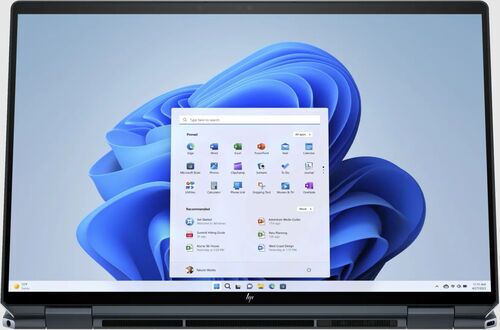
Surface Laptop Ultra buy now or wait: what your workload actually needs
Strip away the platform story and the decision comes down to five checks.
Capability. Does the job need 70 to 120 billion parameter local models, or a shared CUDA and memory pool bigger than a normal laptop GPU offers? Most work doesn't.
Compatibility. Windows on Arm emulates most software, but kernel-mode drivers, VPN clients, capture cards, and specialist audio or CAD tools often need native Arm versions that may not exist yet. Check every driver and plug-in the workflow depends on, not just whether the main application launches.
Governance. Large local memory can run more AI agents for longer, which raises the stakes if one misbehaves: reading another agent's files, following instructions hidden inside a document, or continuing to run after network access should have been cut. Microsoft's containment and identity controls for that are still rolling out, not fully proven.
Economics. With no price announced, there's nothing to weigh yet against a workstation, a refurbished laptop, or renting cloud GPU time for occasional jobs.
Service. A replaceable SSD is a promise, not a finished service network. Confirm parts and repair turnaround exist in your country before counting on it.
Two or more unclear answers here mean the safer move is to buy something proven now instead of waiting on all five.
Surface Laptop Ultra vs. refurbished alternatives you can buy today
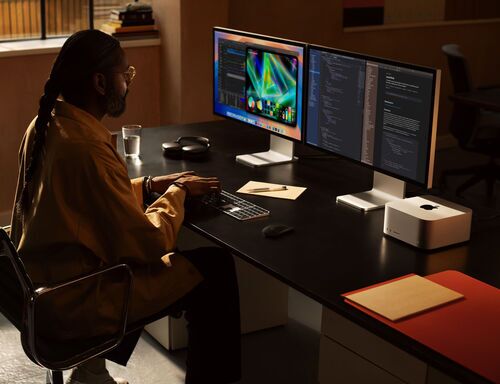
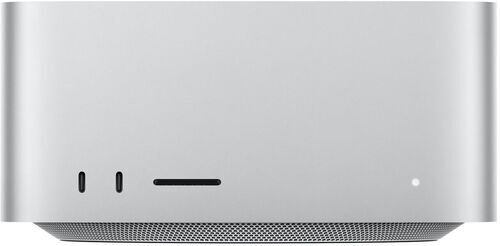
From 33 369 kr
Best for
Large local AI models on macOS, no Windows or CUDA needed
Processor
Apple M4 Max
RAM Type
LPDDR5X
Connectivity
WiFi 6, Bluetooth 5.3, 4x Thunderbolt 5
Availability
In stock, refurbished
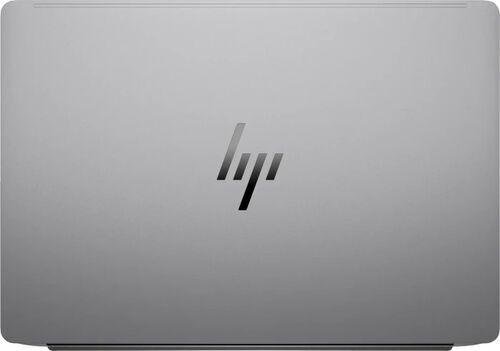
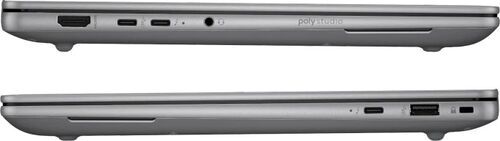
Windows with a large shared memory pool, no CUDA needed
AMD Ryzen AI Max PRO 380
LPDDR5X
WiFi 7, Bluetooth 5.4, 2x Thunderbolt 4
In stock, refurbished
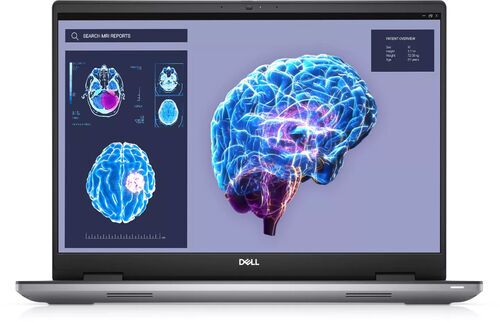
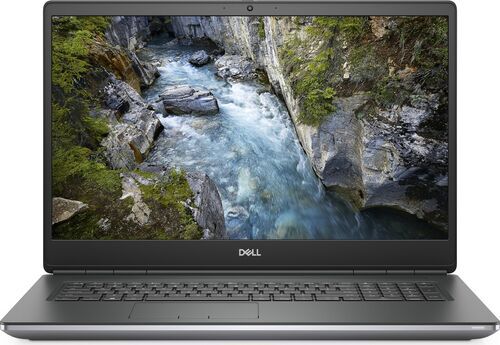
Certified Windows apps and conventional NVIDIA CUDA
Intel Core i9-13950HX
DDR5
WiFi 6, Bluetooth 5.3, 2x Thunderbolt 4
In stock, refurbished
Three refurbished machines that already do the job
Who should wait for the Surface Laptop Ultra, and who shouldn't
Buy a high-memory Mac now if the work runs on macOS and Metal-friendly tools already. The capacity and the software both exist today.
Buy a mature Windows laptop now if the models involved stay under roughly 27 billion parameters. A modern RTX laptop handles that comfortably.
Stay on x86 now if certified Windows applications, VPN clients, or specialist drivers are non-negotiable. Driver maturity outweighs a new platform's promise.
Wait and pilot the Surface Laptop Ultra only if the need is a recurring one: 70 to 120 billion parameter local models, on Windows specifically, with data that can't leave the device. Do it properly: audit every driver and application first, bench real workloads on a handful of units, then integrate with existing device management before any wider rollout.
Wait for price and evidence if the appeal is owning the most powerful Surface available, with no workload behind it. Capacity without a job to do isn't a reason to spend on a new platform.
For a similar call on a very different machine, see the site's take on the Acer Aspire Go 15.
Or skip owning hardware: rent the GPU by the hour
Every option above assumes regular use. If the 70 to 120 billion parameter job comes up rarely, renting cloud GPU time can cost less than owning hardware that sits idle most days.
Independently published cloud pricing (Runpod, August 2026) runs from around $1.39 an hour for an NVIDIA A100 with 80GB of memory, up to $1.99 for an RTX Pro 6000 with 96GB, and $4.39 for an H200 with 141GB. Storage keeps billing even while the compute is switched off, so that adds up for anything left sitting between sessions.
Buying refurbished instead of a new, unproven platform frees up real money for exactly this. A few hundred euros saved on the daily machine covers hundreds of hours of rented GPU time, for the rare week that needs it.
Buy proven, not unproven
A first-generation device launches with no independently verified battery life, no published price, and no complete parts catalogue yet. Every laptop on refurbed skips all three of those unknowns: it's tested, graded, and backed by a warranty and a return window before it ever reaches you.
That's the trade worth making while the Surface Laptop Ultra is still a preview page. Proven hardware, a real price today, and cover if anything goes wrong.
The environmental case: what buying refurbished actually saves
Manufacturing any new laptop carries a real cost before it ever gets switched on: mining raw materials, manufacturing components, and shipping the finished device around the world. A refurbished purchase skips that step entirely by extending a machine that's already in circulation.
Buying refurbished instead of new saves, on average, around 355kg of CO2 and roughly 90,000 litres of water per laptop, weighted across real sales data for refurbished laptops sold on refurbed. Larger workstation-class machines, like the alternatives above, tend to sit toward the higher end of that range.
It isn't a reason to buy on its own. It's a real number attached to a real choice: the same class of machine, tested and warrantied, with a smaller footprint attached.
Capacity isn't throughput: reading past the spec sheet
A big unified memory number is not the same as fast responses. Whether a large local model feels usable in practice depends on memory bandwidth, how the model is compressed, how much context it's holding, and whether the software drivers are mature enough to use the hardware well.
Independent memory-bandwidth testing across this class of hardware found no single architecture wins every time: strong raw bandwidth doesn't automatically beat a well-optimised software stack, and the reverse holds too. A model fitting in memory is the first check, not proof it runs at a usable speed.
Ask for load time, prompt processing speed, and sustained speed after the laptop heats up, not just the maximum model size a spec sheet claims.
Surface Laptop Ultra buy now or wait: FAQs
How much does the Surface Laptop Ultra cost?
Unannounced. Microsoft has confirmed the hardware but not pricing, exact memory and storage tiers, or a fixed release date, only later in 2026 subject to certification and region.
When can I buy one?
Not yet, and there's no fixed date. Microsoft's own timeline is later in 2026, subject to certification and regional availability, which can slip.
Will refurbed sell a refurbished Surface Laptop Ultra?
Not for a long while. Refurbished stock builds up from real trade-ins and returns, which takes years for a brand-new platform. Browse current refurbished Microsoft laptops instead.
Is 128GB of memory overkill for most people?
Yes. Unless the work involves large local AI models or professional CUDA workloads, that much unified memory goes mostly unused.
What should I buy right now instead?
It depends on the workload: a high-memory Mac for macOS AI work, a Windows laptop with a large shared memory pool for a similar setup without CUDA, or an x86 workstation for certified apps and conventional CUDA. All three are covered above, in stock, and refurbished.
Ready for a machine that's proven, not a promise?
Pick the refurbished laptop that matches the work, backed by a real warranty and a price you can see today. Browse the full range and find the right fit.

Sign up for our newsletter for the first time and save 200 kr!
Never miss an offer again.
Information about the use of personal data can be found in our Privacy policy.
Get the refurbed app
For iOS and Android


Confirm sign-up
Click the link in our confirmation e-mail to receive your voucher. It will be applicable to purchases from 3000kr.
- © Refurbed Marketplace GmbH
- Accessibility
- T&C
- Privacy Policy
- Imprint
- Legal Notices
- European Data Act
- Cookie Policy