Smartphone release cycle: who launches when, and why September matters
Every September the same ritual plays out. Apple holds its keynote, the first reviews appear, and for a few weeks it feels as if every new phone arrives at once.
A decade of launch dates tells a different story. The smartphone release cycle has one fixed point, Apple's September, and the other big brands each position themselves around it. Samsung keeps its distance with two seasons of its own, Google switched from following Apple to going first, and Huawei launches closer to Apple than anyone else.
Once you know who launches when, and why, the calendar becomes a practical tool for choosing your next smartphone. It shows when each brand's current flagship turns into last year's model, and why launch-day excitement rarely tells you anything new.
The smartphone release cycle at a glance
Most years follow the same order. Here is the calendar, with the 2026 dates as the latest example.
January to March: Samsung Galaxy S. Samsung's main flagship line launches in the first quarter, every year since 2016. The Galaxy S26 was announced on 26 February 2026.
July: Samsung Galaxy Z. Samsung's summer launch has belonged to the foldables since 2021 and has fallen in July since 2023. The Galaxy Z Fold8, Z Fold8 Ultra and Z Flip8 were announced on 22 July 2026.
August: Google Pixel. New Pixels have arrived in August since 2024, after years of October launches. The Pixel 11 was announced on 12 August 2026.
Late August to September: Huawei. In recent years, Huawei's premium launches have landed close to Apple's. The Mate XT 2 was unveiled on 7 September 2026.
September: Apple. The keynote falls in the first half of the month, and the first new iPhones reach shops about ten days later. Apple announced the iPhone 18 Pro and Pro Max on 9 September 2026 and put them on sale from 18 September. The foldable iPhone Duo follows on 23 October.
The order has held for a decade, which is what makes it worth knowing before you buy.
Smartphone launch strategy: four brands, four clocks
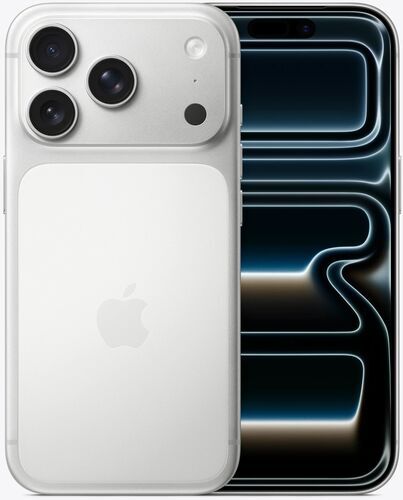
Apple: how the iPhone release date became the fixed point
Apple runs the steadiest clock of the four. In 10 of the 11 years from 2016 to 2026, the first new iPhones went on sale in September. The one exception was the pandemic year: the iPhone 12 reached shops on 23 October 2020, and Apple was back in September the following year.
The rhythm inside the month is equally steady. The keynote comes in the first half of September, and the phones typically reach shops 10 days later, never fewer than 9 and never more than 11 in the past decade. The date that counts is the first day in shops for the main line, not for every model: in 2017 the iPhone X followed the iPhone 8 by several weeks.
That predictability works as a strategy in its own right. A date everyone can see coming gives carriers, accessory makers, journalists and rival brands a shared point to plan around. It also makes the event so easy to anticipate that release day itself rarely brings news. Whether the newest models justify their launch price is a separate question, answered in our look at the iPhone 18. Earlier generations are available as refurbished iPhones.
Samsung's Galaxy release schedule: two seasons, far from the iPhone
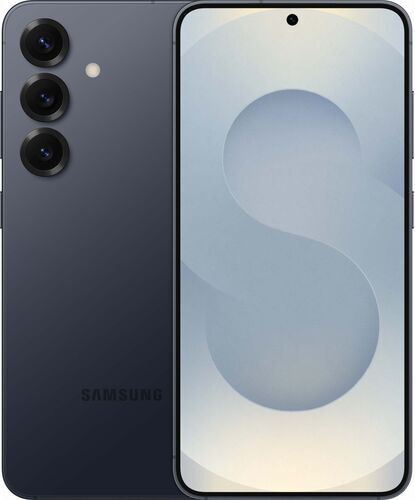
Samsung's calendar rarely touches Apple's. Instead of one big moment, it runs two flagship clocks. The Galaxy S series launches in the first quarter, every year since 2016, anywhere from mid-January to late March: the Galaxy S21 came earliest, on 14 January 2021, and the Galaxy S8 latest, on 29 March 2017.
The second clock runs in summer. It carried the Galaxy Note until 2020 and has belonged to the Galaxy Z foldables since 2021. Measured against the iPhone's first day in shops, this summer launch typically comes 45 days earlier. It landed within 30 days of the iPhone only once in 11 years, in 2017, and since 2023 it has come 58 to 72 days early. In 2026 the Galaxy Z Fold8, Z Fold8 Ultra and Z Flip8 were announced on 22 July, 58 days ahead of the iPhone. See how the Z Fold8 compares with the Z Fold7 it replaced.
The result is a year with two Samsung moments instead of one, and less direct competition for Apple's release-week attention. For the Galaxy S line, the first-quarter clock is the one to watch: here is what the next Galaxy S means for today's models. Or browse refurbished Samsung phones.
Google Pixel release date: from following Apple to going first
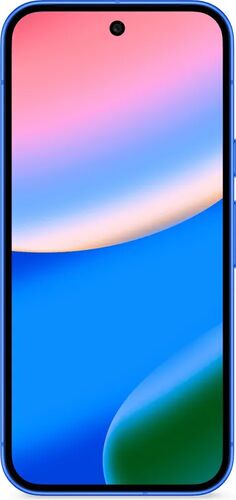
Google turned its calendar around. From 2016 to 2023, the Pixel arrived after the new iPhone was already in shops in every year except 2020, usually in early or mid October. In both 2016 and 2023, the launch fell on 4 October.
In 2024 Google moved its flagship launch to August. The Pixel 9 was announced on 13 August, 38 days before the new iPhone reached shops. The Pixel 10 followed on 20 August 2025, 30 days ahead of the iPhone, and the Pixel 11 on 12 August 2026, 37 days ahead. It is the clearest change of strategy in a decade of launch dates.
Averaged over the whole decade, the gap between Pixel and iPhone comes out close to zero, and that average hides two opposite strategies. Going first gives the Pixel weeks of attention of its own, instead of arriving after the iPhone's news cycle has peaked. A new Pixel does not make the previous one a worse phone: see how the Pixel 11 compares with the Pixel 10, or browse Google phones.
Huawei's Mate launches: the rival that stays closest to Apple
Huawei's calendar does the opposite of Samsung's. Its selected premium launch fell within 30 days of the iPhone's first day in shops in 9 of the 11 years, typically 15 days away: closer than any other brand.
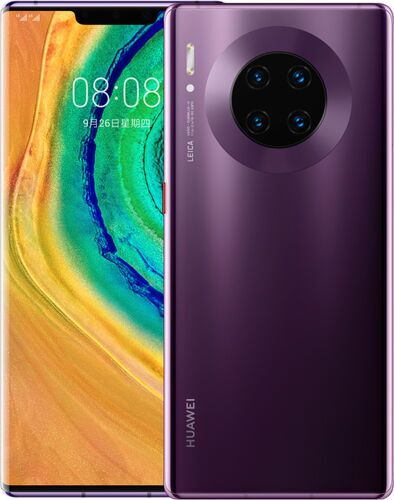
Three examples stand out. The Mate 30 series was announced on 19 September 2019 and the Mate 40 series on 22 October 2020, each one day before the new iPhone went on sale. In 2024 Huawei unveiled the Mate XT tri-fold hours after Apple's keynote and put it on sale on 20 September, the same day as the iPhone 16. The pattern held with the Mate XTs on 4 September 2025 and the Mate XT 2 on 7 September 2026. Only two years broke it: the Mate 9 arrived in November 2016 and the P50 in July 2021.
Launching next to Apple invites direct comparison and shares the same news cycle, especially in China. The calendar itself becomes part of the product message, a kind of competitive theatre. The Huawei Mate 30 Pro, the phone from that 2019 story, is one of the Huawei phones you can find refurbished, depending on current stock.
What decides when a new phone comes out?
Calendar patterns show strategy, but they do not prove what anyone intended. Every launch date also has to survive the practical side of making and selling phones.
Manufacturing readiness: enough phones have to be built to fill shops in many countries on day one.
Component supply: a date only holds if every chip, screen and camera module arrives in volume.
Local holidays: public holidays in the countries where phones are made and sold can move a schedule.
Distribution: carriers and retailers in every launch market need stock at the same time.
Software schedules: a new phone ships with new software, so the two timelines have to meet.
One more change runs through all four brands: the single launch day is splitting into many. Foldables, staggered models, surprise listings and regional launches make the annual phone launch a series of moments rather than one clean day. Samsung's two seasons and Huawei's same-day listing in 2024 are examples, and so is Apple's own 2026 lineup. The iPhone 18 Pro and Pro Max reached shops from 18 September, the foldable iPhone Duo follows on 23 October, and no standard iPhone 18 was announced at the September event.
Does iPhone release day move Apple's share price?
Not in any way you could rely on. An analysis of the ten iPhone releases from 2016 to 2025 compared Apple's share price from release day through the next five trading days with the S&P 500 tracker SPY over the same days.
On average, Apple came out 0.82 percentage points ahead of the market. But in the median year it trailed the market by 0.46 points, and only 4 of the 10 years were positive. Without 2025, when Apple finished 7.18 points ahead, the average shrinks to 0.11 points. The weakest year, 2016, left Apple 3.31 points behind. In 2022 the share price fell and still beat the market by 4.02 points, because the market fell further. None of the tested windows came close to the usual threshold for statistical significance.
Ten launches make a small sample, subtracting the market is a simple adjustment, and the figures describe what happened around release dates, not what the launches caused. This is a historical observation, not investment advice. The explanation is the useful part: investors learn the product story at the keynote and through supply-chain reports, pre-order data, carrier checks, reviews and earnings. By release day the story has already been told, for investors and for buyers.
Reading the smartphone release cycle: the best time to buy
Launch day is when attention peaks, not when value appears. The price and the features are public from the keynote, and the first reviews follow before or around release day, so the day a phone reaches the shelf adds nothing you did not already know.
What the calendar does tell you is when each brand's current flagship becomes last year's model and starts its second life. The latest round:
Samsung Galaxy S25: the Galaxy S26 followed in February 2026.
Samsung Galaxy Z Fold7: the Z Fold8 followed in July 2026.
Google Pixel 10: the Pixel 11 followed in August 2026.
Apple iPhone 17 Pro: the iPhone 18 Pro followed on 18 September 2026.
From one generation to the next, phones usually move forward in modest steps, so a flagship from the last cycle still delivers most of the everyday experience. And because the brands launch in different seasons, some brand's flagship becomes last year's model in almost every season of the year. The weeks after any launch are a good time to look at the phone it replaced, and refurbished is where that phone starts its second life.
Refurbished smartphones from the last cycle: years of support ahead
Refurbished is a third option alongside new and used: a phone professionally checked, cleaned and reconditioned until it is hard to tell apart from new. For a phone from the last cycle, the key question is how long the updates keep coming.
Google promised seven years of software support for the Pixel 8 and Pixel 8 Pro in October 2023, into 2030. Samsung promised seven generations of Android upgrades and seven years of security updates for the Galaxy S24 series in January 2024. Apple does not publish a general commitment, but its UK regulatory filing for the iPhone 15 Pro Max states at least five years of security updates from the day it first went on sale.
In the EU, phones placed on the market from 20 June 2025 must receive operating system updates for at least five years after the last unit of a model is sold, and batteries must keep at least 80% of their capacity after 800 charge cycles.
Each annual cycle means another production run, and a refurbished phone is one that already exists. On refurbed, every phone comes with a seller test report confirming it is fully functional, a condition grade, its battery status shown before you buy, a minimum 12-month warranty and a 30-day trial.
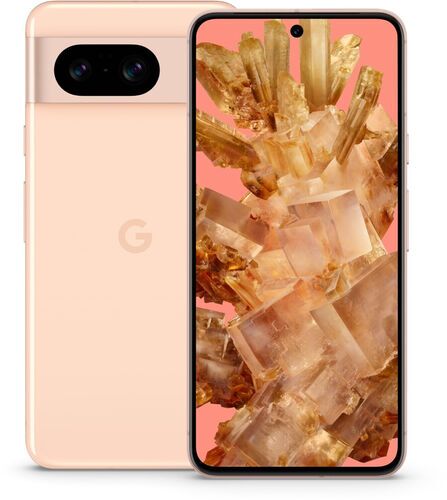
Refurbished smartphones: the environmental difference
Each refurbished smartphone sold on refurbed carries verified environmental savings compared to buying new. Based on scientific research by Fraunhofer Austria (ISO 14040/14044 verified):
↓ iPhone 17 Pro (256 GB): SAVED 84.3 kg CO₂e | 31,407.6 L water | 182 g e-waste
↓ Samsung Galaxy S25 (128 GB): SAVED 63.9 kg CO₂e | 23,990.3 L water | 139.1 g e-waste
↓ Google Pixel 10 (128 GB): SAVED 83.4 kg CO₂e | 31,042.7 L water | 178.7 g e-waste
Frequently asked questions about the smartphone release cycle
When do new iPhones come out?
In September. Apple holds its keynote in the first half of the month, and the new iPhones reach shops about ten days later. That has been the pattern in 10 of the last 11 years. The only exception was 2020, when the iPhone 12 arrived in October.
When does Samsung release new phones?
In two seasons. The Galaxy S series launches between January and March, and the Galaxy Z foldables arrive in summer, in July in recent years. Since 2023 the summer launch has come 58 to 72 days before the new iPhone.
When does Google release new Pixel phones?
In August, since 2024. Before that, the Pixel usually arrived in October, after the new iPhone. The Pixel 11 was announced on 12 August 2026, 37 days before the iPhone 18 Pro reached shops.
Should I buy a new phone on launch day?
There is no need to. The price and features are public from the keynote, and consecutive generations usually differ in modest steps. The same launch that brings a new model also moves the previous flagship into its second life, often at a more affordable price on the refurbished market.
Is last year's flagship still a smart buy refurbished?
Yes. It is one generation old, Google and Samsung now promise seven years of updates on recent flagships, and on refurbed it comes with a minimum 12-month warranty and a 30-day trial. Browse refurbished smartphones to compare the current options.
Find your next refurbished smartphone on refurbed
Whichever clock your favourite brand runs on, the phone it has just moved on from is where the value sits. Every refurbished smartphone on refurbed is professionally checked and graded, and comes with a minimum 12-month warranty and a 30-day trial.
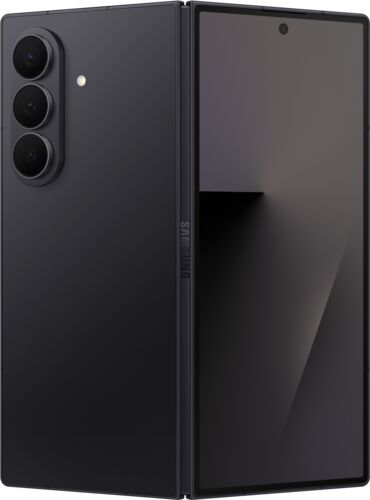

Sign up for our newsletter for the first time and save 200 kr!
Never miss an offer again.
Information about the use of personal data can be found in our Privacy policy.
Get the refurbed app
For iOS and Android


Confirm sign-up
Click the link in our confirmation e-mail to receive your voucher. It will be applicable to purchases from 3000kr.
- © Refurbed Marketplace GmbH
- Accessibility
- T&C
- Privacy Policy
- Imprint
- Legal Notices
- European Data Act
- Cookie Policy