iPhone 17 vs Galaxy S26: which refurbished flagship should you buy?
So you’ve landed on the iPhone 17 and the Galaxy S26, and you want to know which one deserves your money. Both cameras earn gold standard marks in independent testing. Both handle daily life without complaint. Dig into six separate head-to-head tests, though, and one thing stands out: nobody declares a single winner.
The honest answer: the iPhone 17 and the Galaxy S26 pull ahead in different areas, for different people. Below is where each one wins, and where the difference barely matters day to day. Buy either one refurbished on refurbed and you get the same flagship experience for meaningfully less than retail.
Quick verdict: iPhone 17 or Galaxy S26?
Pick the Galaxy S26 if zoom, video quality, multitasking, or built-in AI tools matter most to how you use your phone. Pick the iPhone 17 if you want a simpler camera experience, a tighter connection to a Mac, Watch, or iPad, or a battery that reliably gets you through the day.
Neither is the wrong choice. Browse refurbished iPhone 17 and Galaxy S26 options and compare real prices before deciding.
iPhone 17 vs Galaxy S26: specs compared
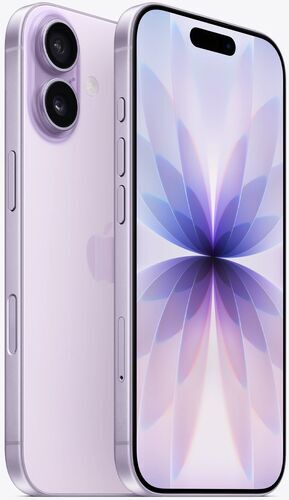
Display
6.3 in OLED, 120Hz, HDR10
Processor
Apple A19
Rear Camera
48MP + 48MP ultrawide
Front Camera
18MP
Battery
3692 mAh
RAM
8GB
Connectors
USB-C 2.0
Weight
177g
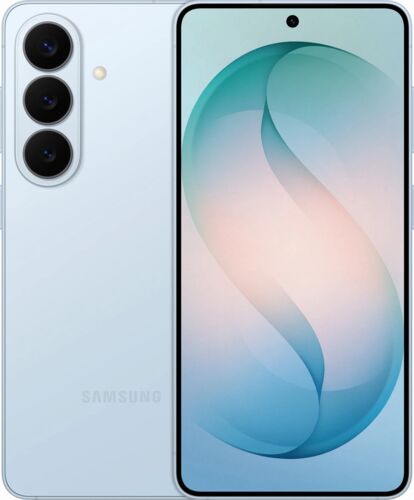
6.3 in AMOLED, 120Hz, HDR10+
Samsung Exynos 2600
50MP + 12MP ultrawide + 10MP tele
12MP
4300 mAh
12GB
USB-C 3.2
167g
Design and everyday ergonomics
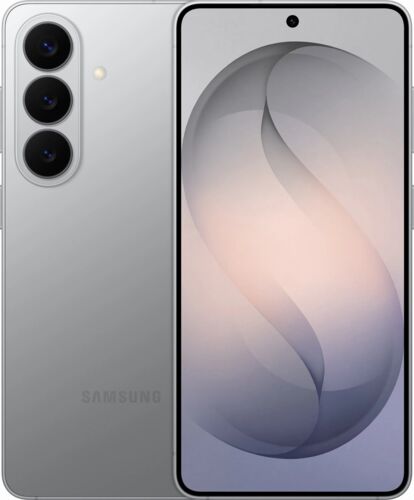
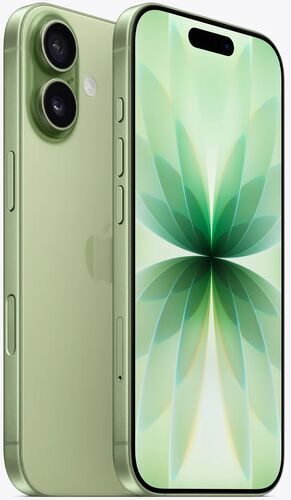
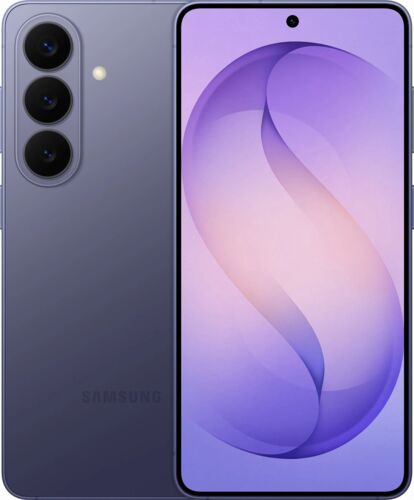
On paper, the Galaxy S26 is the slimmer, lighter phone: 7.2mm thick and 167g, against the iPhone 17’s 8mm and 177g, with both sharing an almost identical footprint. In hand, the two take different approaches. Galaxy S26 wears a boxier, more angular shape this generation, with flatter rails that grip well even without a case. iPhone 17 keeps its familiar rounded edges, and owners who have carried it for months tend to settle on that shape as the more comfortable one for one-handed use.
Buttons tell a similar story: iPhone 17 gives you more physical controls, including an Action Key and a dedicated camera button for zooming, while Galaxy S26 sticks to a single, reprogrammable power button. Neither approach is wrong, it depends on whether you want more physical shortcuts or a cleaner side profile.
Camera and zoom: where these two flagships diverge
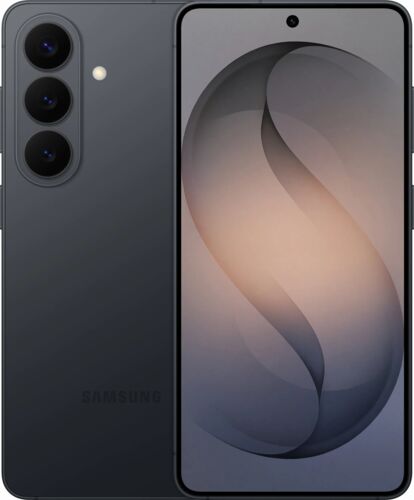
Both phones earn gold standard marks for their camera among current flagships, so this is less about a bad camera and more about different strengths. iPhone 17 carries a dual camera setup: a 48MP main sensor paired with a 48MP ultrawide that doubles as a macro lens. Galaxy S26 goes further with a triple camera: a 50MP main sensor, a 12MP ultrawide, and a dedicated 10MP telephoto lens.
That telephoto lens is the real dividing line. iPhone 17 has no dedicated zoom lens, so anything past 3x is a digital crop, and by 10x the results turn soft and pixelated. Galaxy S26 holds real detail well past that point, with one long-term test putting its usable zoom ceiling at 30x, a decisive win if you photograph concerts, wildlife, or anything far from where you are standing.
iPhone 17 claws some ground back on the ultrawide, where its extra resolution and macro focus edge out Galaxy’s 12MP ultrawide for detail and low-light range. And there is a fairness angle worth knowing: Samsung keeps its best camera hardware for the Ultra tier and does not pass much of it down to the base S26, while Apple carries more of its Pro camera improvements down to the base iPhone. One practical tip: Galaxy S26 shoots at 12MP by default, lower than iPhone’s 24MP-class default, and getting the full resolution means installing a separate camera app, something most buyers never think to do.
The plot twist: color science flips between photo and video mode
One especially careful tester lined up both phones against a professional full-frame camera shot of the same subject, using it as a ground truth for judging color accuracy rather than just comparing the phones to each other. The result held up: in still photos, iPhone 17 tracks closer to that true-to-life reference, while Galaxy S26 leans more vivid, often pushing skin tones toward pink or magenta.
Switch to video mode, though, and the pattern flips entirely. Galaxy S26 becomes the warmer, more contrasty phone on video, and iPhone 17 is the one that leans magenta. Two other independent tests noticed the same reversal, which is what turns this from a one-off quirk into a real pattern worth knowing before you pick a phone based on stills alone.
Selfies and portraits: no single winner
Selfie quality splits opinion more than any other camera topic here. Some testers prefer Galaxy S26’s more natural, true-to-life skin tone and texture. Others prefer how iPhone 17 renders faces, especially at night, where Galaxy S26 pulls ahead on selfies specifically, a reversal of iPhone’s usual low-light edge in other lighting conditions.
iPhone 17’s rectangular selfie sensor is a practical strength: it shoots both vertical and wide horizontal selfie video and lets you switch orientation without turning the phone, useful for vlogging or video calls. On portraits, Galaxy S26 smooths skin more and warms up the tone, while iPhone 17 keeps more texture and highlight detail. Neither is better, it comes down to which look you prefer in your own photos.
Video and stabilization: 8K, horizon lock and what iPhone is missing
iPhone 17 tops out at 4K60 video. Galaxy S26 goes up to 8K and adds a Pro video mode with a flat LOG color profile for footage you plan to color grade later, a feature travel and content creators get more out of than casual users.
The bigger difference is stabilization. Galaxy S26 includes a horizon lock feature: spin the phone in your hand mid-recording, tilt it, walk while filming, and the footage stays level throughout, a feature iPhone 17 does not have. One long-term test demonstrated this by rotating the phone freely through a full 360-degree turn while the subject stayed steady in frame.
iPhone 17 answers back on selfie video: it handles backlit scenes more gracefully, and its rectangular sensor lets you shoot both vertical and wide horizontal video without switching modes, a real plus for vloggers and video calls alike.
Performance: benchmarks vs everyday feel
Our refurbished Galaxy S26 runs Samsung’s own Exynos 2600 chip, so the numbers below come from tests on that exact variant rather than the Snapdragon version sold in some markets.
On raw benchmarks, iPhone 17 wins single-core performance, and Galaxy S26 wins multi-core. Under a sustained stress test designed to catch throttling, the Exynos chip held its performance steady while iPhone 17’s lead faded over time, a surprise result for Samsung’s in-house silicon.
In real editing work, Galaxy S26 finished a 99-photo Lightroom export about 1.5 minutes faster than iPhone 17, and a one-minute 4K video export around 15 seconds faster, though both phones handle these tasks quickly in absolute terms. Some games cap Galaxy S26 at 30 frames per second where iPhone 17 defaults to 40, but Galaxy runs cooler while doing it.
Day to day, multiple independent tests describe Galaxy S26 as feeling slightly smoother in everyday use, an impression rather than a benchmark. With 12GB of RAM against iPhone 17’s 8GB, Galaxy S26 also has more headroom for keeping several apps open at once.
Battery, charging and everyday software
Despite its smaller battery on paper (3692 mAh against Galaxy S26’s 4300 mAh), iPhone 17 comes out ahead on real-world battery life in every test that measured it directly. In one nine-app battery loop test, Galaxy S26 lasted 10 hours and 42 minutes while iPhone 17 crossed 11 hours, a surprising result given the battery sizes involved.
Charging tells a more mixed story. With a fast enough charger, iPhone 17 can reach 50% in around 20 minutes against roughly 30 minutes for Galaxy S26. On wireless charging, though, one long-term test found Galaxy S26 slower than iPhone 17, flipping the usual assumption that Samsung phones charge faster.
On software, Galaxy S26 currently ships with more built-in AI: Galaxy AI, a Circle to Search style tool, and an at-a-glance daily briefing feature, plus a desktop-style multitasking mode with split-screen for real productivity work. Apple Intelligence is expected to close some of that gap later in the year. Where iPhone 17 still leads is ecosystem: it connects to a Watch, Mac, or iPad more smoothly than Galaxy S26 connects to its own wider device family.
Audio and speakers
Both phones get loud enough for a small room, but they sound different doing it. iPhone 17 leans crisper and more balanced, with richer bass definition at maximum volume. Galaxy S26 gets louder overall and adds Dolby Atmos-based sound customization: bass boost, treble adjustment, and a feature that prevents sudden jumps in volume, though it can turn tinny at the very top of its range.
For voice recording, the two are close enough to call a wash, and background noise comes through on both in typical conditions. This one comes down to taste rather than a clear winner.
Price: the one objective difference
Price is the one place these two phones do not need much interpretation. Every source that compares pricing puts iPhone 17 as the more affordable option, and more than one points out that Galaxy S26 costs more than its predecessor while carrying largely the same core camera hardware for another generation.
That gap matters less once you buy refurbished. Getting either flagship through refurbed closes most of the price difference, so the phone that fits your life matters more than which one costs less new.
The smarter way to own an iPhone 17: buy it refurbished
Buying refurbished means getting a phone that has been professionally tested, cleaned, and checked function by function, not a second-hand gamble. Every refurbed purchase comes with a minimum 12-month warranty and 30 days to return it if it is not the right fit.
Choosing a refurbished iPhone 17 (256GB) instead of a new one avoids this real environmental impact:
↓ CO₂ emissions: 70.8 kg SAVED (84% less than a new device, equivalent to driving close to 500km)
↓ Virtual water: 26,494 litres SAVED (88% less, equivalent to about 177 bathtubs filled with water)
↓ E-waste: 154g SAVED (78% less than a new device)
Figures verified by Fraunhofer Austria under the ISO 14040/14044 standard. Browse refurbished iPhones to compare current prices.
The environmental case for a Galaxy S26
Galaxy S26 is too new for Fraunhofer’s researchers to have studied directly yet, so the closest real figures come from the Galaxy S25, built on the same generation of hardware and battery chemistry.
Choosing a refurbished Galaxy S25 (128GB) instead of a new one avoids this real environmental impact:
↓ CO₂ emissions: 63.9 kg SAVED (83% less than a new device, equivalent to driving about 447km)
↓ Virtual water: 23,990 litres SAVED (87% less, equivalent to about 160 bathtubs filled with water)
↓ E-waste: 139.1g SAVED (76% less than a new device)
Figures verified by Fraunhofer Austria under the ISO 14040/14044 standard. Expect Galaxy S26’s own numbers to land in a similar range once Fraunhofer completes a study on this specific model. The same refurbed advantages apply either way. Browse refurbished Samsung phones to compare current prices.
iPhone 17 or Galaxy S26: which one fits your life?
If you mostly share photos on social media, want a phone that is simple to use well without fiddling with settings, and care about all-day battery, the iPhone 17 fits. It is also the natural pick if you are already deep in Apple’s ecosystem with a Mac, Watch, or iPad, or if price is the deciding factor.
If you photograph concerts, travel, or wildlife and want real zoom range, edit video seriously, or want the most capable built-in AI tools and a solid multitasking setup for work on the go, the Galaxy S26 fits better. Think of iPhone 17 as the flagship built for everyone, and Galaxy S26 as the flagship built for people who push their phone harder.
Neither is a wrong purchase. The honest split holds up across multiple independent tests, including one creator who reached the same conclusion twice, three months apart. Buy the one that matches how you use your phone, not the one that wins more spec sheets.
iPhone 17 vs Galaxy S26 FAQs
Which has better zoom, iPhone 17 or Galaxy S26?
Galaxy S26. Its dedicated telephoto lens holds real detail well past 10x, while iPhone 17’s digital-only zoom turns soft by that point. Anyone photographing distant subjects regularly will notice the difference.
Does the iPhone 17 or Galaxy S26 last longer on battery?
iPhone 17, in every real-world test that measured it directly. Despite a smaller battery on paper, it consistently outlasts Galaxy S26 across a normal day of mixed use.
Is the Galaxy S26 or iPhone 17 better value refurbished?
Both close most of the price gap with new. iPhone 17 costs less new to begin with, but refurbished pricing on either model comes down to condition grade and current stock rather than which phone you choose.
Which phone has better video quality?
Galaxy S26 for resolution and stability: it shoots up to 8K and includes horizon lock stabilization that keeps footage level through movement. iPhone 17 caps at 4K60 but handles backlit selfie video more gracefully.

Sign up for our newsletter for the first time and save 200 kr!
Never miss an offer again.
Information about the use of personal data can be found in our Privacy policy.
Get the refurbed app
For iOS and Android


Confirm sign-up
Click the link in our confirmation e-mail to receive your voucher. It will be applicable to purchases from 3000kr.
- © Refurbed Marketplace GmbH
- Accessibility
- T&C
- Privacy Policy
- Imprint
- Legal Notices
- European Data Act
- Cookie Policy