Pixel 11 vs iPhone 17: how the newest flagships compare
Google just launched the Pixel 11, and Apple's iPhone 17 has been out since last September. You want to know how they compare on camera, display, performance and AI before you decide what to buy next.
Here is the honest complication. Pixel 11 retail only opens on August 20, and every review published so far is a hands on impression, not a long term test. A refurbished iPhone 17 or Pixel 10 already delivers most of what the newest release promises, today, for less, and with real environmental savings behind it.
Here's a twist worth knowing upfront: Pixel 11 launches at $899, while iPhone 17 starts at $799, a hundred dollars less for an Apple flagship that already has a full year of real world testing behind it.
Quick verdict: which one is right for you?
Want the strongest zoom lens and the most capable AI toolkit? The Pixel line wins on both, and a refurbished Google Pixel 10 gets you close to the Pixel 11 experience right now, for less.
Want smoother video, a simpler ecosystem and a phone your apps already know? A refurbished iPhone 17 is the safer, more affordable pick. Either way, buying refurbished beats waiting on unproven, brand new stock.
Design and build: what changed this year
Pixel 11 keeps the same footprint as its predecessor but reworks the camera bar into a single glass strip that sits about 40% lower than before. The frame uses recycled aluminium, the back is Gorilla Glass Victus 2 with a satin finish, and it comes in four new colours. One reviewer who spent hands on time with the redesigned bar called the smaller camera protrusion 'just wonderful' to hold.
iPhone 17 sticks close to its predecessor's flat glass look. The frame is aluminium, the back is glass, and reviewers who tested both phones side by side found the iPhone's rounder corners more comfortable to hold day to day. At 177 grams it is also the lighter phone of the two; Pixel 11 comes in at 197 grams.
Neither design is a dramatic departure. Both brands spent this generation refining what already worked.
Display: same size, different refresh range
Both phones use a 6.3 inch OLED panel, so the two look nearly identical side by side. The difference sits in how the screen behaves once you start using it.
iPhone 17 runs a full adaptive range from 1Hz up to 120Hz, which is what makes an always on wallpaper possible without draining the battery. Pixel 11's base model tops out at 120Hz but cannot drop below 60Hz, so that always on flexibility is reserved for the Pro tier. iPhone 17 also supports a broader range of HDR formats out of the box.
Both companies now list the same peak brightness spec on paper: 3,000 nits for iPhone 17 and 3,000 nits for the base Pixel 11, per Apple's and Google's own published figures. That is a confirmed number, not a rumour, but no outlet has yet run independent outdoor visibility testing on the Pixel 11, so how the two actually compare side by side in direct sunlight is still an open question.
Camera: telephoto is where they differ most
Pixel 11's telephoto lens is the standout spec on paper: 10.8 megapixels with 5x optical zoom and up to 30x digital zoom, the largest and longest reach of any base model Pixel to date. iPhone 17 still has no telephoto lens at all in the standard model, relying instead on a 2x digital crop from its main sensor, a policy Apple has held for several generations running.
One reviewer testing the outgoing Pixel generation against iPhone 17 summed up the ultrawide gap between these two camera philosophies bluntly: 'Computational photography is cool and all, but physics is physics.' A bigger sensor still beats software processing when the light gets difficult, and that is exactly where Pixel's hardware lead shows up.
Pixel 11's main sensor also jumps to 48 megapixels at f/1.7, with Google claiming 56% more light sensitivity than the outgoing model. iPhone 17 answers with sharper video detail and stronger portrait background blur, according to reviewers who tested the previous generation side by side.
No outlet has published real sample photos comparing the Pixel 11 against an iPhone yet. Google's own embargo on comparative images runs until August 19, so treat every camera claim about the Pixel 11 as provisional for now.
Performance, battery and charging
Pixel 11 runs on Google's new Tensor G6 chip, built on a genuine manufacturing first for the line: a 2 nanometre process. Early hands on impressions call it a little snappier than last year, with Google claiming a 50% jump in on device AI capability and, notably, zero quoted improvement to graphics performance. The first independent Geekbench 7 numbers, run on the Pro XL variant, show a mixed picture: about 7% faster single core, but 12% slower multi core than the outgoing chip, likely down to fewer CPU cores. Whether that same pattern holds on the base Pixel 11 specifically has not been tested yet.
iPhone 17 runs the Apple A19. Its numbers against the Pixel 11 have not been tested either, since every published benchmark so far compares the A19 to older Pixel and Galaxy chips, not to Tensor G6.
Both phones now start at 256GB of storage with 12GB of RAM, a jump industry watchers call a real turning point for the entry tier flagship segment.
Pixel 11's 4,985mAh battery charges to 55% in 30 minutes on a 30W wired connection, plus 25W wireless through its built in Qi2.2 magnetic charging system. iPhone 17 matches that wireless speed at 25W through its own MagSafe/Qi2 implementation, and already has a tested, dependable real world battery track record behind it. Pixel 11's real world endurance is still untested: the reviewer who tested the phone at launch declined to estimate it, and noted only that their own Pixel 10 improved noticeably after its first few months of use.
Software, AI and the update promise
Pixel 11 leans hardest into software; The Verge summed up the whole generation as 'a little new hardware with a lot of new software.' Rambler, its new system wide AI dictation tool, works through the keyboard in any app, and early hands on testing calls it the most capable dictation the reviewer has used. Gemini powered live dubbing translates video into four languages at launch, syncing lips and tone automatically, a feature one reviewer compared favourably against the roughly 2,000 dollars per video they normally pay for human dubbing.
iPhone 17's AI rollout is described across multiple reviews as comparatively light so far, trading a slower AI start for tighter integration across Apple's own ecosystem. Both brands now converge around seven years of promised OS support, closing what used to be a real gap between them.
Worth knowing: Google's own marketing quietly shifted its Pixel 11 Pro RAM language from 'starting at' to 'up to' 16GB this year, a wording change that reviewers caught as the tell for a 12GB base configuration. Some reviewers have directly tied that Pro line RAM cut to open questions about how much on device AI headroom it actually leaves. It is a useful reminder to read yearly spec sheets carefully, not just the headline number.
Generation to generation: what actually changes
Zoom out across four independent comparisons this generation and a pattern shows up everywhere: yearly flagship jumps keep getting smaller, on both hardware and software.
iPhone 17 and its Android rivals both iterate on last year's design rather than reinvent it, according to reviewers who tested them side by side. Pixel 11 Pro and Pro XL changes are, in one reviewer's words, 'frustratingly subtle', with Google criticised for burying real figures in fine print: a headline 29% faster charging claim turns out to be Pro only, and a newly touted top brightness figure was imperceptible to the reviewer compared with last year's panel.
The clearest signal is the industry wide convergence on 256GB storage and 12GB RAM as the new entry tier baseline, described by one reviewer as a fight that is finally over in 2026 rather than a single brand's leap ahead.
None of this makes either phone a bad buy. It does mean the gap between this year's flagship and last year's has never been smaller, which is exactly why last year's flagship, bought refurbished, keeps making sense.
The environmental case for buying refurbished
Every new flagship launch nudges people to replace a phone that still works fine. Buying refurbished breaks that cycle without asking you to give up a current generation device.
Every phone sold on refurbed is inspected, professionally cleaned, tested end to end, and backed by a minimum 12 month warranty before it reaches you. Keeping a working phone in use for years longer cuts down on the raw materials, energy and water a brand new device needs to manufacture.
The savings are not vague marketing. A refurbished iPhone 17 or Google Pixel 10 avoids real, independently measured environmental impact, backed by refurbed's sustainability research.
iPhone 17 vs Pixel 10: what you can buy refurbished right now
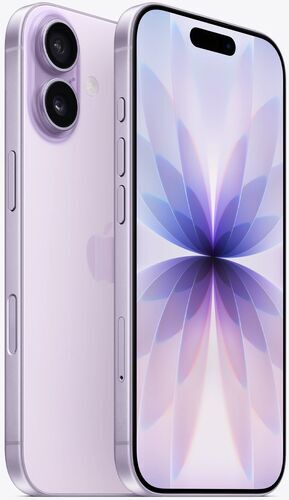
Display
6.3" OLED, 120Hz
Chip
Apple A19, 8GB RAM
Camera
48MP + 48MP ultrawide
Battery
3,692mAh
Storage
256GB
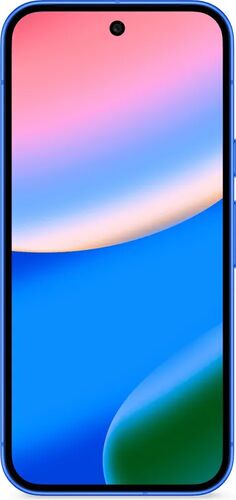
vs.
6.3" OLED, 120Hz
Google Tensor G5, 12GB RAM
48MP + 13MP wide + 10.8MP telephoto
4,970mAh
128GB
Which one should you buy?
One more thing before you decide between two brand new flagships: a reviewer who spent hands on time with the full Pixel 11 lineup recommends buying a discounted Pixel 10 instead of the new Pixel 11, specifically for buyers who want the Pixel software experience. Hardware barely moved this generation, RAM even dropped on some models, and most of the real gains are software based, which tends to trickle down to older phones anyway.
Choose Pixel, new or refurbished, if you shoot a lot of zoomed in or telephoto shots, or if you want the most capable on device AI assistant available right now.
Choose iPhone 17 if video quality and a simple, tightly integrated ecosystem matter more to you than zoom range, or if you are already inside Apple's ecosystem with AirPods, a Mac or an Apple Watch.
Wait on the brand new Pixel 11 if you specifically need next gen chip performance and can live with untested battery life for a few more months. For nearly everyone else, a refurbished iPhone 17 or Pixel 10 gets you 90% of what either 2026 flagship offers, for meaningfully less, and you can browse refurbished smartphones to compare current stock today.
Refurbished iPhone 17 and Pixel 10: the environmental difference
Each refurbished smartphone sold on refurbed carries verified environmental savings compared to buying new. Based on scientific research by Fraunhofer Austria (ISO 14040/14044 verified):
↓ iPhone 17 (256 GB): SAVED 70.8 kg CO₂e | 26,494.1 L water | 154 g e-waste
↓ Google Pixel 10 (128 GB): SAVED 83.4 kg CO₂e | 31,042.7 L water | 178.7 g e-waste
Pixel 11 vs iPhone 17 FAQs
What is the single biggest difference between Pixel 11 and iPhone 17?
Telephoto. Pixel 11 has a 5x optical zoom lens built in; the standard iPhone 17 has none at all, relying on a 2x digital crop instead, a gap Apple has kept for several generations.
Is the Pixel 11 more expensive than the iPhone 17?
Yes, at launch. Pixel 11 starts at $899, while iPhone 17 starts at $799, a hundred dollar gap that makes Apple's phone the more affordable brand new flagship this year, on top of already having a full year of real world testing and reviews behind it.
When will the Pixel 11 be available refurbished on refurbed?
Not yet. Refurbished stock takes months to build after a launch, since it depends on trade ins and returns reaching professional testing first. Pixel 10 and iPhone 17 are today's closest refurbished equivalents.
Is buying refurbished better for the environment?
Yes. Independent research shows refurbished purchases avoid a meaningful share of a new device's carbon footprint and water use compared with manufacturing new.
Is iPhone 17 or Pixel 10 the smarter refurbished buy today?
It depends on what you shoot and which ecosystem you are already in. Pixel 10 wins on zoom and AI features; iPhone 17 wins on video and Apple ecosystem integration. Both are a great deal refurbished.

Sign up for our newsletter for the first time and save 200 kr!
Never miss an offer again.
Information about the use of personal data can be found in our Privacy policy.
Get the refurbed app
For iOS and Android


Confirm sign-up
Click the link in our confirmation e-mail to receive your voucher. It will be applicable to purchases from 3000kr.
- © Refurbed Marketplace GmbH
- Accessibility
- T&C
- Privacy Policy
- Imprint
- Legal Notices
- European Data Act
- Cookie Policy